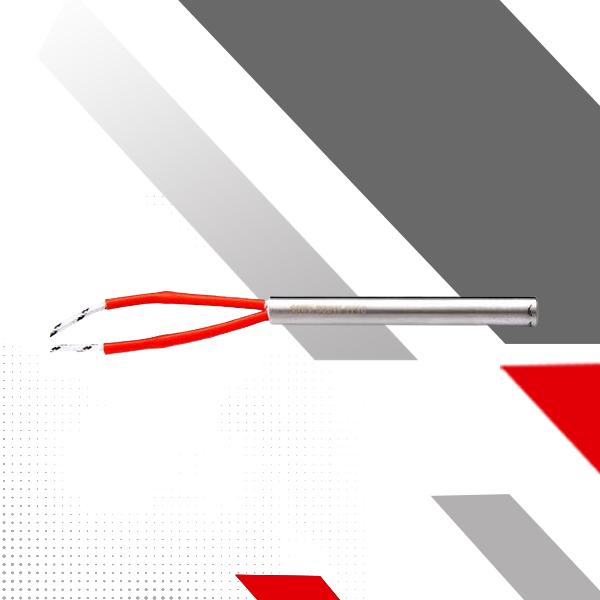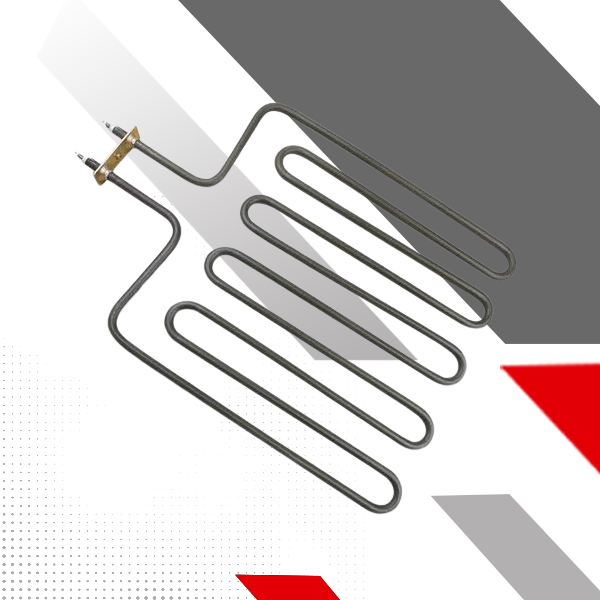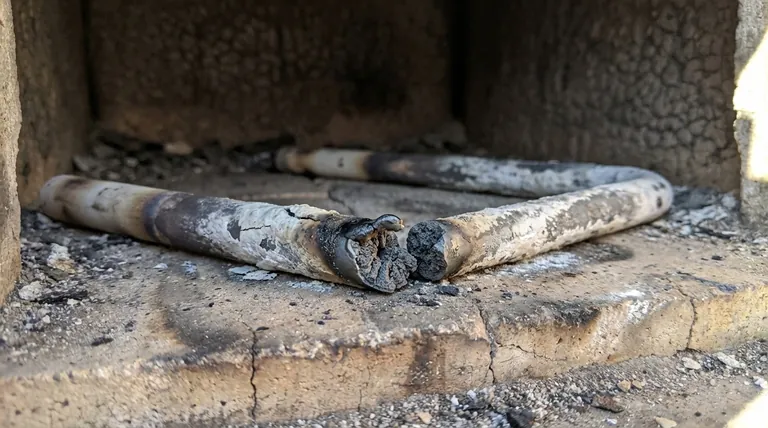
Unexpected heater failure means production downtime, maintenance cost, and potential product loss. Understanding the root cause of each failure mode allows you to prevent recurrence rather than simply replacing the element. Here are the six most common failures encountered across cartridge, band, tubular, and immersion heaters.
1. Open Circuit (Element Burnout)
Symptom: Heater draws zero current; infinite resistance on multimeter.
Root causes:
- Localised overheating due to loose fit (cartridge heaters) or partial contact (band heaters)
- Operating above rated watt density
- Frequent thermal cycling causing resistance wire fatigue
Prevention: Verify hole tolerance before installation; do not exceed rated voltage; use a low-watt-density element if cycling frequently.
2. Ground Fault (Sheath-to-Earth Short)
Symptom: RCCB/ELCB trips; resistance between sheath and element is below 1 MΩ.
Root causes:
- Moisture ingress — most common. Water or steam contamination of the MgO fill reduces insulation resistance dramatically.
- Physical damage to sheath allowing moisture entry
- Running at high temperature with a cracked sheath
Prevention: Store heaters in dry conditions; seal terminal ends properly; bake out a heater at low voltage before use if it has been stored in damp conditions (insulation resistance should recover above 20 MΩ before energising at full voltage).
3. Terminal Burnout
Symptom: Discolouration, arcing, or mechanical failure at the connection point.
Root causes:
- Loose electrical connections — creates high resistance, localised heating, and arcing
- Wrong lead wire specification for the terminal ambient temperature
- Vibration causing connection loosening over time
Prevention: Use correct crimped connectors or insulated mechanical terminals; torque to specification; check connections during planned maintenance.
4. Hot Spots (Localised Overheating)
Symptom: Visible oxidation or bulging at specific points along the sheath; element fails early.
Root causes:
- Air pockets between the element and the heated surface (band heaters not clamped tightly)
- Scale or fouling on immersion heater surfaces insulating the element
- Uneven drilling of bore holes for cartridge heaters
Prevention: Clean immersion heater surfaces of scale; torque band heater bolts after initial heat-up; verify bore concentricity.
5. Moisture-Induced Failure at Startup
Symptom: Element failure within minutes of first energising after storage or installation.
Root causes:
- Moisture absorbed into the MgO insulation during storage or shipping in humid conditions
Prevention: Apply a bake-out procedure — energise at 10% rated voltage for 1–2 hours before full-power operation. This drives off moisture without creating the thermal shock that destroys a wet element at full power.
6. Sheath Corrosion / Chemical Attack
Symptom: Pitting, perforation, or general corrosion of the outer sheath.
Root causes:
- Wrong sheath material for the process fluid (e.g., standard 304 SS in acid media)
- Crevice corrosion at flange interfaces
- Galvanic corrosion from mixed metals in the vessel
Prevention: Match sheath material to chemical compatibility charts; use Incoloy 825 or titanium for aggressive acids; specify Teflon-coated sheaths for halogen-containing media.
Diagnostic Quick Reference
| Measurement | Good Heater | Suspect | Failed |
|---|---|---|---|
| Element Resistance | Per nameplate ±10% | +20% deviation | Open / Zero |
| Insulation Resistance (500V DC) | >100 MΩ | 1–20 MΩ (moisture) | <1 MΩ |
| Current Draw | Per nameplate ±5% | ±15% | Zero or tripped RCCB |
Sri Ambika Heat Products provides technical support for fault diagnosis and offers replacement elements manufactured to the same specification as the failed heater.